


Views: 0 Author: Site Editor Publish Time: 2026-06-17 Origin: Site


Launching a successful kids' apparel line requires balancing parent-approved durability alongside profitable manufacturing margins. Active toddlers demand tough clothing, meaning collections must withstand rigorous daily use. Brand owners must deliver visual appeal without sacrificing essential playground resilience.
For brands developing a Custom Overall, the choice between cotton and linen dictates not just the product's aesthetic, but its target demographic, retail positioning, and production complexity. Each natural fiber presents highly distinct physical characteristics during the cutting, sewing, and washing stages.
Before committing to a technical pack or entering the sampling phase, brands must carefully evaluate how these two materials align with their operational model, strict safety compliance requirements, and factory capabilities. Selecting the optimal fabric foundation ensures smoother bulk production runs across your entire supply chain. It also generates significantly higher long-term customer satisfaction by delivering on parent expectations.
Cotton remains the industry standard for scalability, offering lower MOQs, predictable shrinkage, and year-round consumer demand.
Linen commands a premium retail price and appeals to eco-conscious demographics but requires stricter manufacturing controls for durability and seam slippage.
Blends (Cotton-Linen) often provide the most viable commercial compromise for mid-market brands seeking premium aesthetics without sacrificing playground durability.
Partnering with an experienced Custom Overall manufacturer is critical to navigating pre-washing requirements and children’s wear compliance (e.g., CPSIA, REACH) for both fabrics.
Eco-conscious parents increasingly prioritize natural, breathable fabrics over synthetic alternatives. They want sustainable materials touching their children's sensitive skin. You must align your fabric selection with these shifting environmental values to capture modern market share. Today's consumers rigorously research fabric origins. They actively avoid microplastics often associated with polyester blends. This specific demographic happily invests in high-quality, ethically produced garments.
However, practical use-case realities remain paramount in children's wear. Parents evaluate kids' overalls based on daily stain resistance, laundering frequency, and overall playground wear-and-tear. Toddlers spend countless hours crawling, climbing, and sliding across rough surfaces. Your chosen fabric must solve these daily friction points while fitting neatly into your overarching brand narrative. If an overall looks beautiful but fails a basic grass-stain test, parents will simply not purchase from you again.
Seasonality plays a major role in this decision. You can structure your collection using these strategic nodes:
Strategic Node: Position lightweight linen exclusively for limited-run spring and summer capsule drops.
Strategic Node: Position medium-weight cotton, such as canvas, twill, or denim, for evergreen, year-round SKUs.
By segmenting your offerings, you satisfy both seasonal trends and everyday utilitarian needs. Core cotton collections build reliable revenue streams. Seasonal linen capsules generate brand excitement and seasonal exclusivity.
Cotton provides a highly robust foundation for mass-market scaling. Factories widely prefer it due to its predictable behavior on the cutting table. It does not shift or distort easily during bulk cutting processes. You will find high availability of both standard and organic, GOTS-certified options across the global supply chain.
Manufacturing Advantages:
High availability of organic (GOTS-certified) and standard options ensures uninterrupted supply chains.
It takes dye uniformly, ensuring strict color consistency across massive production batches.
High tensile strength easily withstands heavy-duty hardware installation, like snaps, buckles, and rivets, without fabric tearing.
The material offers significant commercial pros. You benefit from lower raw material costs and healthier profit margins at wholesale. It creates minimal consumer friction regarding daily care instructions. Parents appreciate garments they can throw into a heavy-duty hot wash cycle. The dense weave of cotton twill or denim effectively hides minor stains. It also powerfully resists abrasion from rough playground surfaces.
Despite these benefits, cotton presents notable commercial cons. The market remains highly saturated. You must incorporate unique detailing to stand out against fast-fashion competitors. Brands often utilize utility pockets, bespoke hardware, or custom dyes to differentiate their products. Without distinct design elements, standard cotton overalls risk blending into a crowded retail landscape.
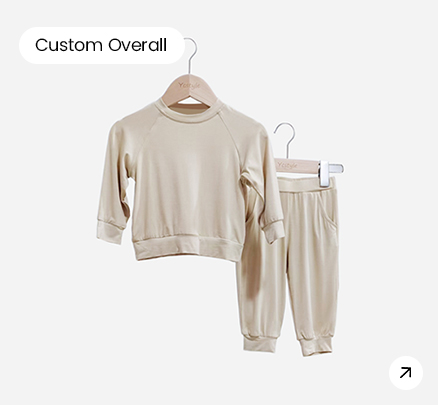
While cotton focuses on rugged utility, linen targets a higher retail tier. It offers a sophisticated, elevated aesthetic highly sought after by boutique shoppers. The texture inherently looks organic and artisanal, telling a compelling sustainability story.
Manufacturing Advantages:
The high perceived value allows for premium MSRP markups.
It is naturally hypoallergenic and highly breathable, perfect for specific newborn and toddler niche markets.
Linen wicks moisture away from the skin rapidly. This makes it an ideal textile for hot, humid climates. Parents seeking chemical-free, ultra-soft options for infants often gravitate toward pre-washed linen pieces.
However, you must carefully navigate several production and adoption risks:
Shrinkage & Pattern Grading: Linen notoriously exhibits high shrinkage rates. Patterns must be expertly graded to account for significant post-wash sizing adjustments. If a factory cuts linen using a standard cotton pattern, the final garment will likely fail quality control.
Durability Concerns: Pure, 100% linen remains susceptible to abrasion at high-friction points like the knees and seat. Active toddlers will wear through unreinforced linen quickly.
Wrinkling: This natural characteristic creates a major friction point for everyday parents. Brands must transparently market the "relaxed look" to manage consumer expectations effectively.
Common Mistake: Do not launch a pure linen collection without educating your customer base on proper care. Inform them about the inherent wrinkling to prevent negative reviews and customer service complaints.
Choosing the right fabric requires balancing aesthetic goals against operational realities. You must evaluate these materials across three distinct commercial pillars to ensure long-term viability.
Cotton provides a remarkably lower barrier to entry. It offers highly predictable, volume-based pricing structures. Factories can source raw cotton easily, stabilizing your seasonal production budgets. Conversely, linen remains subject to raw flax market volatility. Because cultivating and processing flax requires specialized labor, linen generally costs 20-40% more per yard. You must absorb this upfront material cost or pass it onto the consumer through premium positioning.
Both materials require rigorous flammability testing, depending entirely on their final fabric weight. You must also secure lead-free certifications for all attached hardware. Linen’s looser weave presents unique safety challenges. You may require reinforced backing behind metal fasteners. This hidden reinforcement ensures the garment passes mandatory pull-tests for choking hazards. If a snap pulls through the fabric, you risk an immediate product recall.
Many successful mid-market brands evaluate a 70% cotton and 30% linen blend. This hybrid approach achieves the desirable, slubby texture of pure linen. Simultaneously, it maintains the structural integrity and cost-efficiency associated with cotton. Blends mitigate the extreme wrinkling of pure linen while elevating the visual appeal of basic cotton.
Evaluation Criteria | 100% Cotton | 100% Linen | Cotton/Linen Blends |
|---|---|---|---|
Primary Benefit | Maximum durability and scalability | Premium aesthetic and breathability | Balanced texture and strength |
Shrinkage Risk | Low to moderate (predictable) | High (requires careful grading) | Moderate (easily managed) |
Hardware Support | Excellent natural tensile strength | Requires fusible interfacing | Good natural hold |
Ideal Collection Strategy | Evergreen, year-round core items | Spring/Summer limited capsules | Transitional seasonal drops |
Securing the right production partner determines the success of your apparel line. Not all factories possess the technical expertise required for heavy-duty children's wear. You must audit their capabilities strictly before committing capital.
Portfolio Verification: Demand physical samples of previously manufactured woven overalls. You should specifically check for reinforced knee panels and crotch seam durability. Examine the stitch density on high-stress intersections. If the seams show any signs of slippage, find another partner immediately.
Pre-Washing Capabilities: Ensure the Custom Overall manufacturer offers industrial garment washing. Enzyme or silicone washes prove absolutely essential here. These processes eliminate residual shrinkage before the garment reaches the consumer. They also soften rigid canvas or raw linen, improving the hand-feel instantly.
Hardware Sourcing Integration: Assess their supply chain for YKK or equivalent hardware. You must verify all buckles and snaps are strictly lead-free and nickel-free. They must meet global safety standards flawlessly. Request their compliance certificates upfront.
MOQ Flexibility: Confirm if the factory allows split colors within a single fabric roll minimum. This flexibility lets you test both materials efficiently. You can validate market demand without overcommitting your initial inventory budget.
Best Practice: Always request a comprehensive technical audit of the factory's safety testing protocols. This diligence protects your brand reputation and ensures flawless global compliance.
Summary: Cotton offers a safe, highly scalable foundation for most kids' wear brands. It handles the rigors of daily use effortlessly. Meanwhile, linen provides a strategic entry into the premium, eco-luxury market.
Next Steps: We strongly advise brands to order physical fabric swatches first. Request a prototype of a single tech pack executed in both fabrics. You should conduct a rigorous wash-and-wear test before committing to bulk production. Let actual toddlers wear the prototypes to identify structural weaknesses.
Call to Action: Consult your manufacturing team today to develop a detailed fabric sourcing matrix. Request a custom prototyping quote to bring your next collection to life confidently.
A: No. Linen and cotton have different drape, weave stability, and shrinkage rates. Your manufacturer will need to adjust the pattern grading and seam allowances based on the specific fabric. They often use French seams for linen to prevent fraying.
A: Yes, GOTS-certified organic cotton typically increases raw material costs by 15-30%, but it allows brands to target higher-tier retail channels and justifies a higher MSRP.
A: A reliable manufacturer will use hidden fusible interfacing or twill tape at hardware attachment points (shoulders, waist buttons) to reinforce the fabric and pass mandatory safety pull-tests.


