


Views: 0 Author: Site Editor Publish Time: 2026-05-13 Origin: Site


A poorly made custom garment instantly damages your brand perception. Whether you use them for corporate team building, merchandise sales, or promotional giveaways, physical quality directly reflects your organizational standards. Unfortunately, the apparel market currently overflows with low-quality blank garments. You often face restrictive minimum order quantities alongside cheap printing methods. These rushed applications easily degrade, peel, or crack after just a single wash cycle. Such failures completely ruin your initial investment. We provide a vendor-agnostic, evidence-based framework for evaluating fabrics, print techniques, and production models. You will learn how to vet fulfillment partners effectively while avoiding common design pitfalls. This guide guarantees you can confidently navigate complex apparel supply chains. Follow these principles to ensure a consistently high return on your apparel investment.
The "best" custom sweatshirt balances fabric weight (GSM) and blend ratios with the specific requirements of your chosen printing method.
Production models must align with your business goals: Print-on-Demand (POD) offers zero-inventory scaling, while bulk screen printing maximizes unit margins.
Vectorizing artwork and understanding color gamuts (CMYK vs. Pantone) are non-negotiable steps to prevent costly production failures.
Evaluating a vendor requires looking past base pricing to assess setup fees, scalability, and sample quality guarantees.
Establishing physical benchmarks guarantees a premium product. When evaluating a Custom Sweatshirt, you must look closely at material composition. The fabric dictates both comfort and print longevity. We must carefully balance blend ratios against planned usage.
Garment composition directly impacts the final customization result. Different blends serve entirely different functional purposes.
100% Cotton: This offers a premium, breathable feel. It requires pre-shrinking during manufacturing to prevent post-wash distortion. Cotton provides the ideal smooth surface for direct-to-garment (DTG) printing.
80/20 and 50/50 Cotton/Poly Blends: Adding polyester introduces superior durability. These blends retain their shape exceptionally well. They offer excellent cost-efficiency for activewear and daily use.
Weight indicates the garment's warmth and structural integrity. Industry standards measure this in ounces or Grams per Square Meter (GSM).
Lightweight (7-8 oz): These garments function perfectly for layering. They suit warmer climates and active indoor environments.
Heavyweight (10-12+ oz): This weight category defines premium streetwear. It provides essential warmth for winter merchandise. Heavyweight fabrics drape better and feel luxurious.
Manufacturing techniques reveal the true quality of a garment. Construction details separate disposable merchandise from retail-ready apparel.
First, evaluate side-seamed versus tubular construction. Tubular shirts lack side seams. They cost less but drape poorly across the body. Side-seamed construction offers a structured, tailored retail fit. Next, inspect the stitching. Check for double-needle stitching at high-stress points. You should find this reinforcement along cuffs, necklines, and waistbands. Double-needle stitching acts as a reliable proxy for overall manufacturing quality.
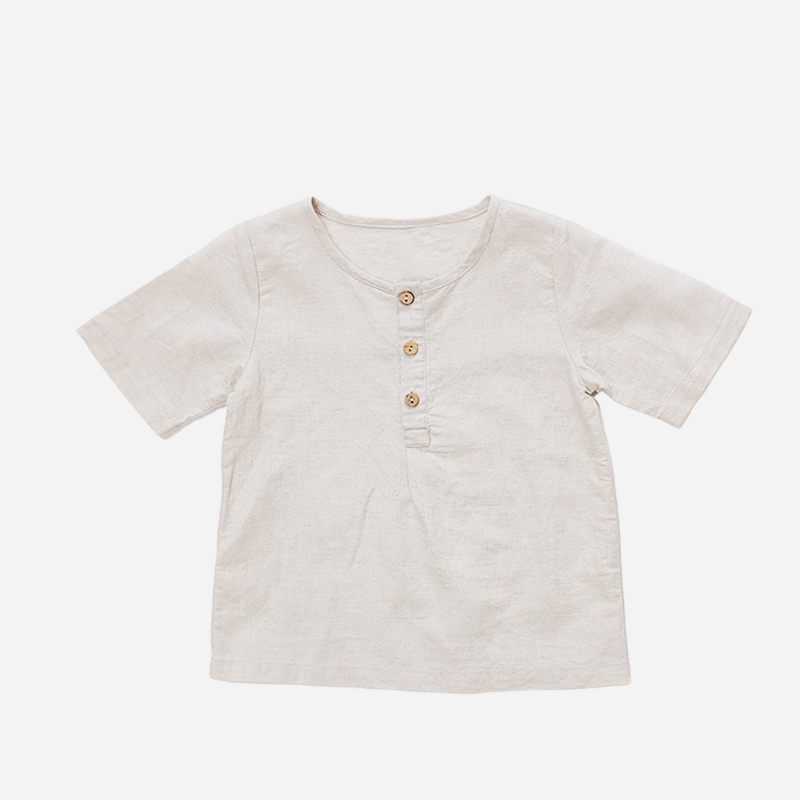
Matching your design complexity to the correct application technology ensures success. Designing a durable Sweatshirt requires careful budget consideration. Each print method carries unique operational constraints.
Screen printing remains the industry standard for bulk apparel. It pushes plastisol or water-based ink directly through a mesh screen.
Best for: Bulk orders typically exceeding 24 units. It excels at reproducing solid colors. Screen printing delivers maximum durability against repeated washing.
Assumptions & Risks: This method requires high upfront setup costs. Vendors must burn individual screens for every single color. Therefore, it remains highly cost-prohibitive for complex gradients or low volumes.
DTG operates much like a standard inkjet printer. It applies specialized ink directly onto the fabric fibers.
Best for: Photorealistic designs and highly detailed artwork. DTG perfectly accommodates zero-MOQ requirements for independent creators.
Assumptions & Risks: The process demands high-cotton blend blanks. Cotton ensures maximum ink vibrancy. DTG prints carry a potential for faster fading compared to plastisol inks. Proper heat curing prevents this degradation.
Embroidery uses automated machines to stitch designs into the fabric. It provides texture and three-dimensional depth.
Best for: Corporate branding and high-perceived value merchandise. It works beautifully for minimalist left-chest logos.
Assumptions & Risks: You must pay upfront digitization fees. Digitizing converts your artwork into a machine-readable stitch file. Large designs can pucker the underlying fabric. Heavy embroidery also feels stiff and uncomfortable against the skin.
Method | Ideal Order Size | Design Complexity | Durability |
|---|---|---|---|
Screen Printing | 24+ Units | Solid colors, bold lines | Extremely High |
Direct-to-Garment | 1-50 Units | Photographs, gradients | Moderate to High |
Embroidery | 12+ Units | Simple logos, text | Maximum |
Your chosen supply chain model dictates your capital requirements. You must frame this business problem around scalability. Bulk customization and Print-on-Demand serve entirely different organizational goals.
Bulk ordering allows you to produce every Custom Sweatshirt at the lowest possible cost per unit. You partner directly with a wholesale printer.
Pros: You achieve the highest profit margins per unit. This model guarantees strict quality control. You can easily request physical proofs before full production begins.
Cons: Bulk ordering remains highly capital intensive. You must purchase inventory upfront. It requires dedicated storage space and active inventory management.
POD connects your storefront directly to a fulfillment partner. Customer orders trigger immediate, automated production.
Pros: This model delivers infinite scalability. You carry absolutely zero upfront inventory risk. Leading POD networks offer global drop-shipping capabilities.
Cons: You will experience significantly lower profit margins. POD networks restrict specific customization placements. Inside neck tags or sleeve prints may cost extra. Sometimes these placements remain completely unavailable. You also rely entirely on the partner's internal quality control.
Experience reveals several hidden pitfalls in apparel production. Avoiding these costly mistakes saves time and preserves capital.
Improper file preparation ruins expensive production runs. Raster images like PNG or JPG often fail at scale. Raster graphics rely on fixed pixel grids. Stretching a small JPG causes severe pixelation and blurring. You must utilize vector graphics for crisp results. AI, EPS, and SVG files use mathematical equations. They maintain clean lines at any conceivable size.
Color space discrepancies also destroy print quality. Computer monitors display colors using RGB light. Printers use CMYK ink. You must design in the CMYK color gamut. Failing to address this discrepancy produces dull, muted printed colors.
Standard print sizes scale poorly across varied garment sizes. A 10-inch wide graphic looks perfectly proportioned on a medium garment. However, that exact same graphic looks tiny on a 3XL. It might wrap awkwardly around the sides of an extra-small garment. You must request scaled proofs for extreme sizes.
Zip-up hoodies introduce unique placement challenges. Navigating zipper placements requires specific expertise. Avoid printing directly over the central zipper tape. Plastisol ink accumulates in the zipper teeth. The print will inevitably crack when the wearer zips the garment.
You must never skip the sampling phase. Ordering a physical sample remains absolutely mandatory. Do this before committing to a 500-unit bulk run. Do this before launching a new POD storefront. A test run exposes fabric flaws. It verifies ink vibrancy and checks sizing accuracy. It serves as your cheapest insurance policy against total project failure.
Choosing the right vendor requires strict shortlisting logic. Base pricing rarely tells the whole story. You need actionable steps to evaluate manufacturing partners effectively.
Always identify hidden costs during the quoting phase. Deceptive vendors advertise impossibly low base prices. They later inflate invoices through opaque surcharges. Look specifically for screen fees and setup charges. Ask about digitizing fees for embroidered logos. Inquire about premium ink surcharges for specialty colors or metallic finishes.
Production timelines fluctuate wildly throughout the calendar year. You must assess guaranteed versus estimated delivery dates. This distinction becomes critical during Q4 holiday scaling. An estimated delivery date offers no legal recourse. A guaranteed SLA protects your promotional calendar.
Ethical manufacturing practices matter to modern consumers. Verify facility certifications if sustainability represents a core brand pillar. Look for WRAP (Worldwide Responsible Accredited Production) certification. Request documentation for any fair-trade claims. Responsible sourcing protects your brand reputation.
Follow a structured process to finalize your vendor selection. Implement these immediate action items:
Create a standardized vendor scoring matrix.
Weight this matrix by Price, SLA, Print Quality, and MOQ.
Select your top three potential vendors.
Request physical blank samples from these three vendors.
Evaluate the blank garments thoroughly before testing their print capabilities.
The success of a custom apparel campaign hinges on precise alignment. You must match the blank garment's quality with the appropriate print method. You must also align production with your chosen financial model. We urge buyers to prioritize vendor transparency over the lowest advertised base price. Always prioritize rigorous sample testing. Begin your project today by requesting physical blank samples from your shortlisted vendors. Alternatively, run a single-unit test through a POD network to evaluate their baseline quality.
A: Print-on-Demand (POD) models feature a 0 MOQ, allowing you to print a single unit. Traditional screen printers typically require 12 to 24 units to cover their initial setup costs and screen preparation time.
A: An 80/20 cotton-polyester blend offers the best resistance. The polyester provides structural strength to prevent shrinking and pilling. Ensure it features a 100% cotton face to maintain a soft feel and provide an ideal printing surface.
A: We strongly advise against printing over the zipper tape. Ink builds up in the teeth, causing severe cracking and poor zipper functionality. We recommend standard chest-pocket or full-back placements instead.
A: You must provide Pantone (PMS) color codes when utilizing screen printing. Printers mix inks to match these exact codes. Be aware that DTG printing relies on CMYK mixing, which carries inherent limitations for precise color matching.


